
Modular Shelving System by Poul Cadovius for CADO, Teak Veneer, Denmark, 1970s
 add to wish list
 Description
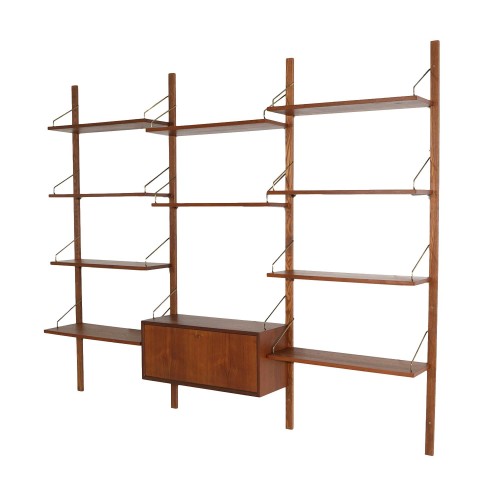
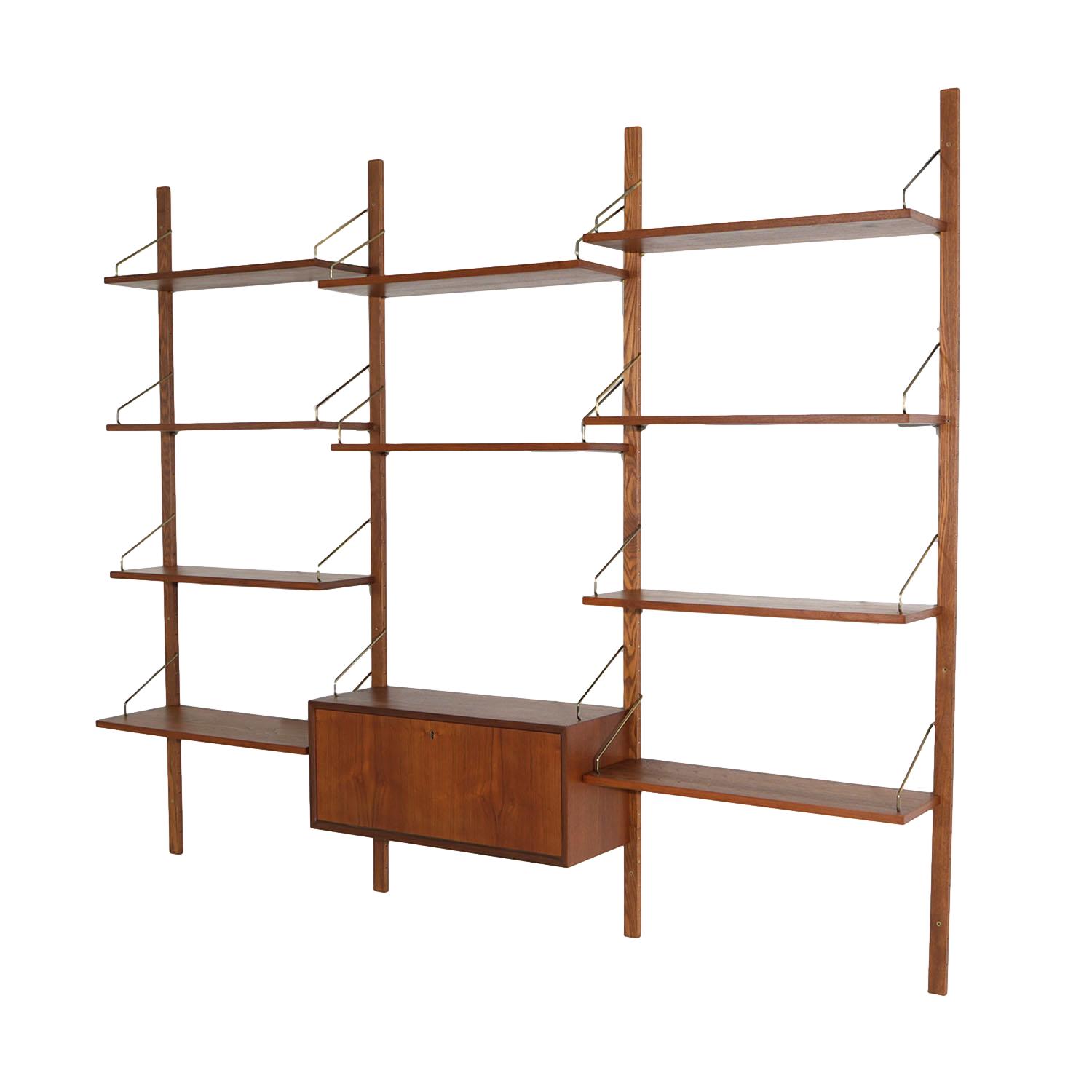
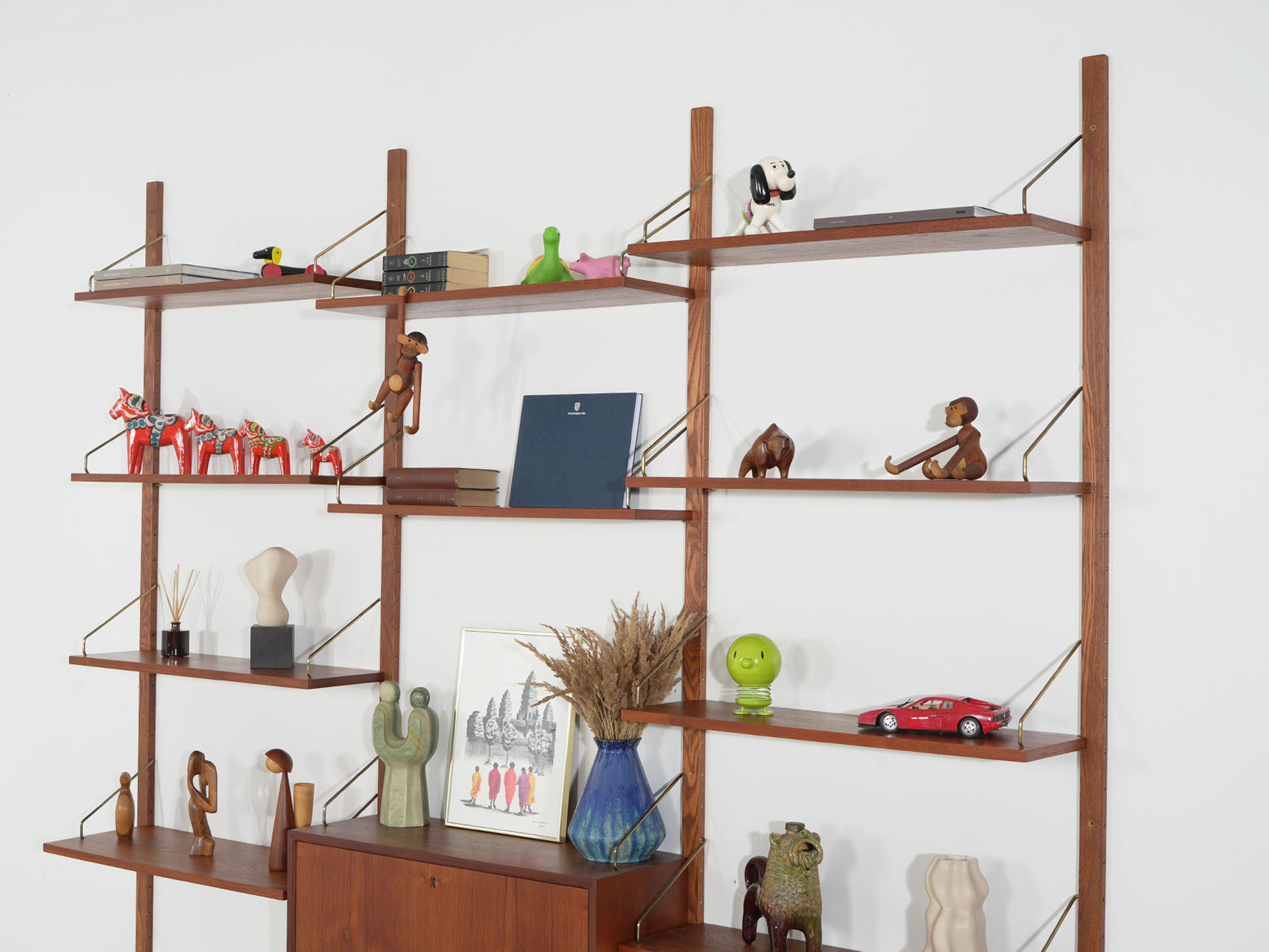
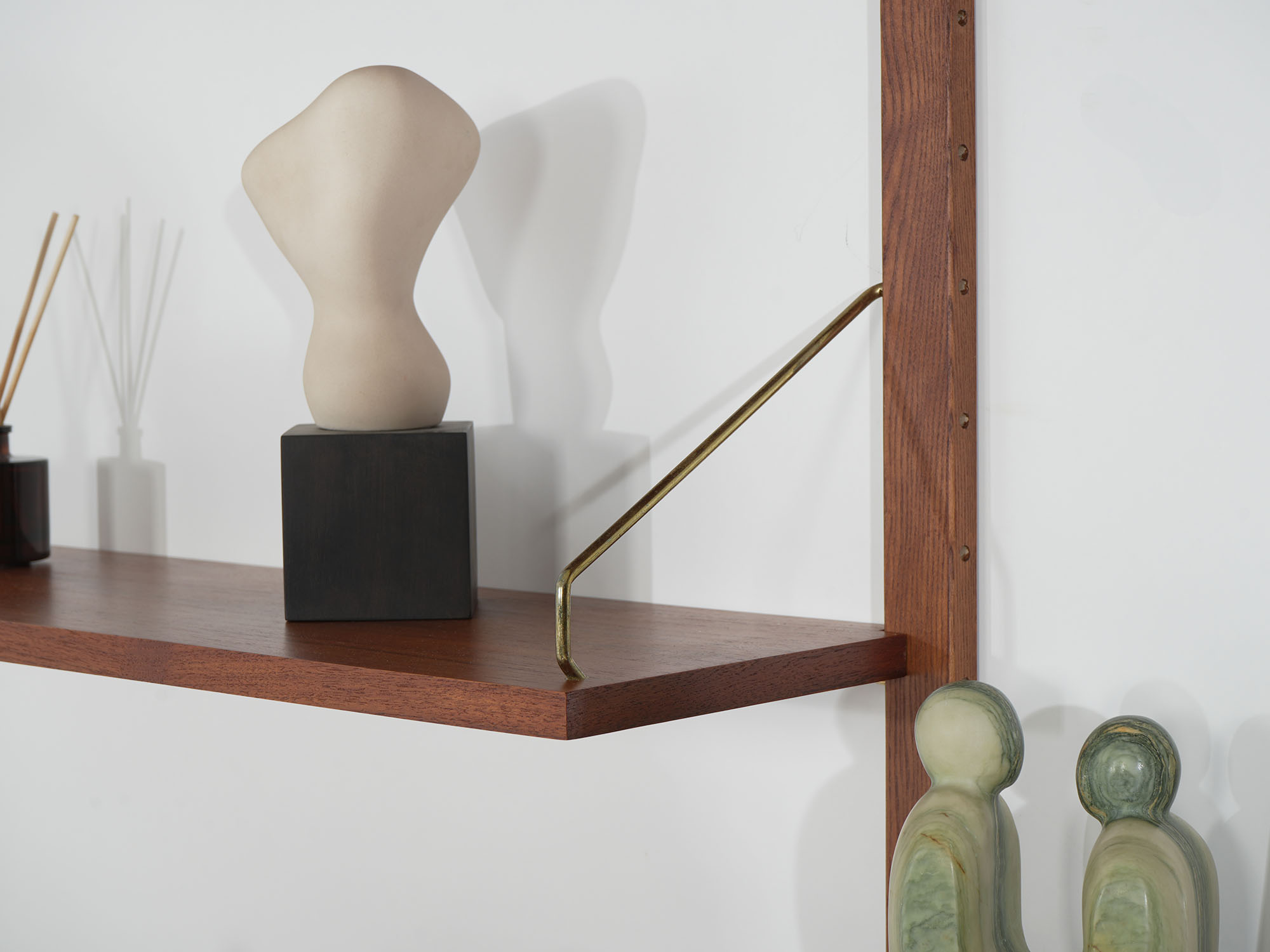
Modular shelving designed by Poul Cadovius, produced by the Danish brand CADO during the 1970s. This system represents the mature phase of the designer's work — Cadovius had pioneered the entire category of wall-mounted furniture back in 1948. The warm teak veneer combines with a light, almost geometric structure of vertical uprights and horizontal shelves.
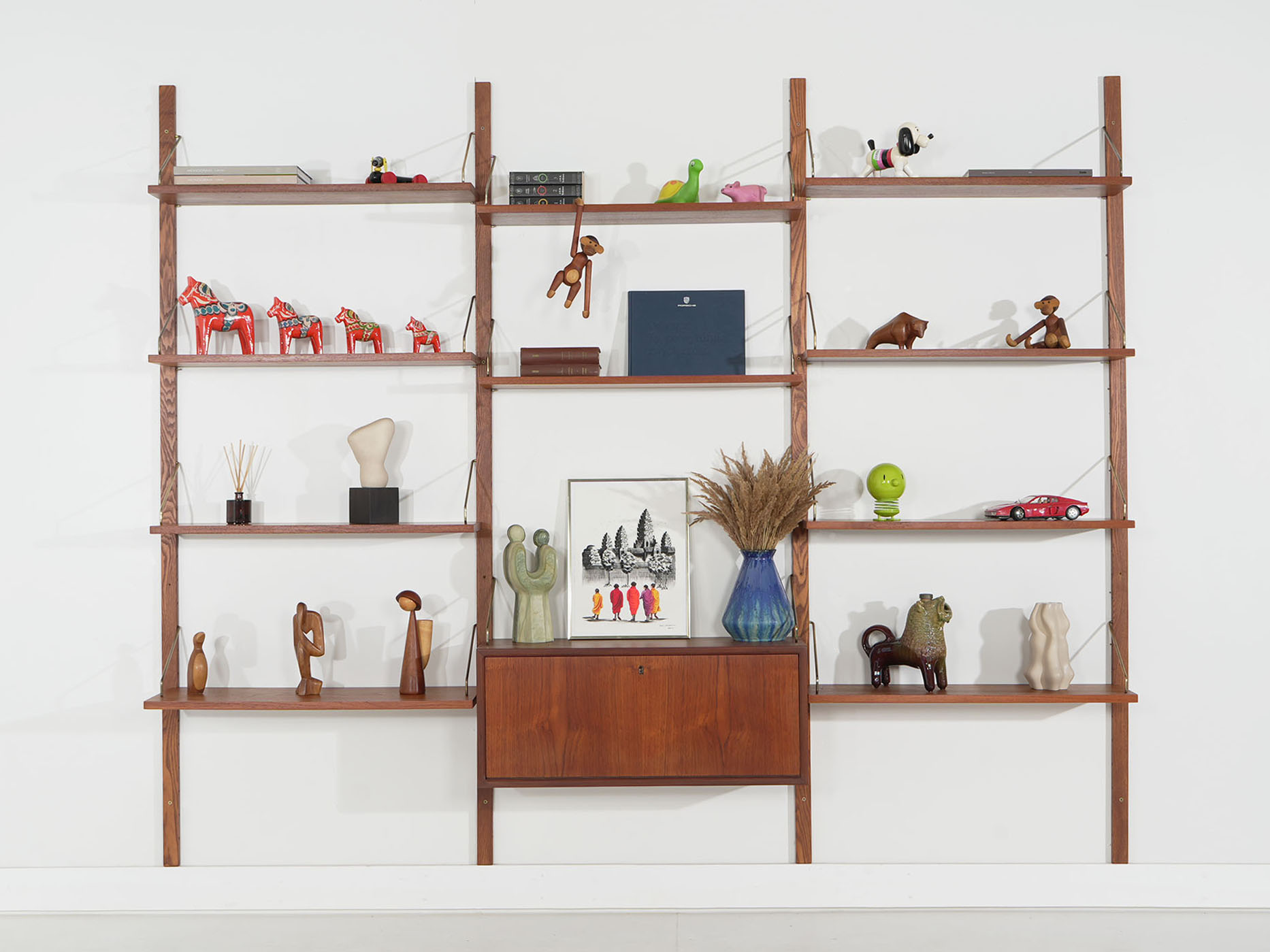
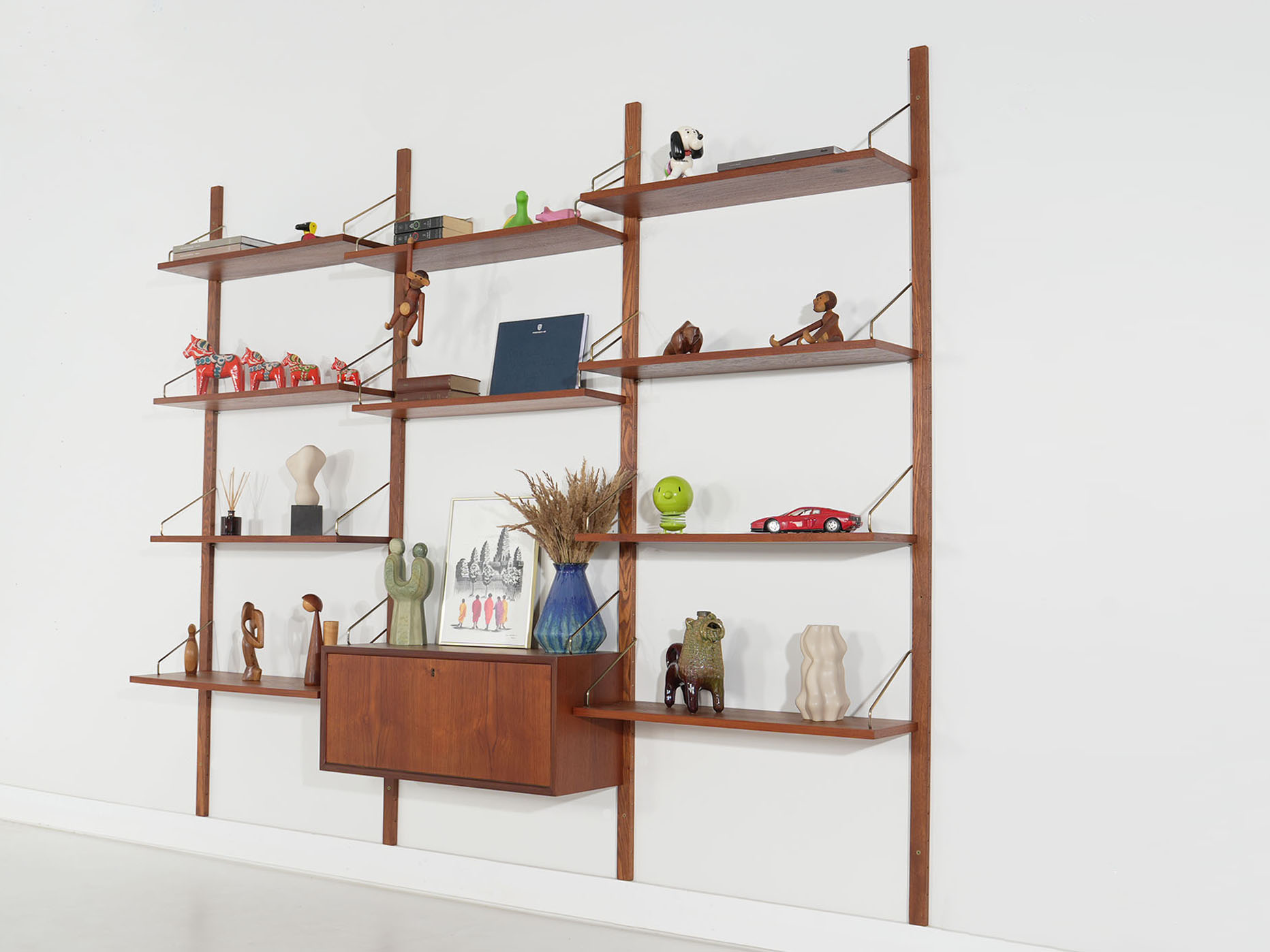
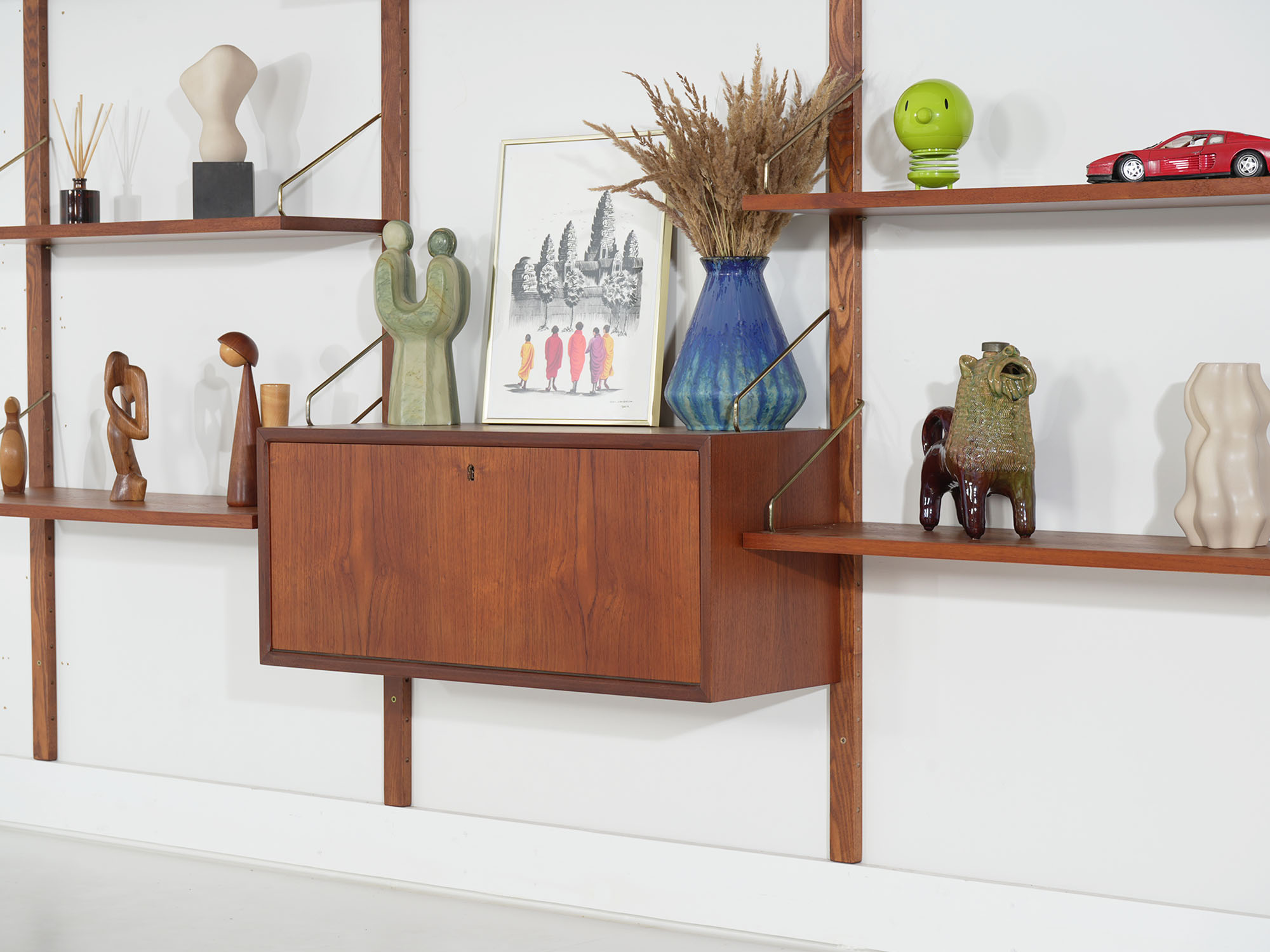
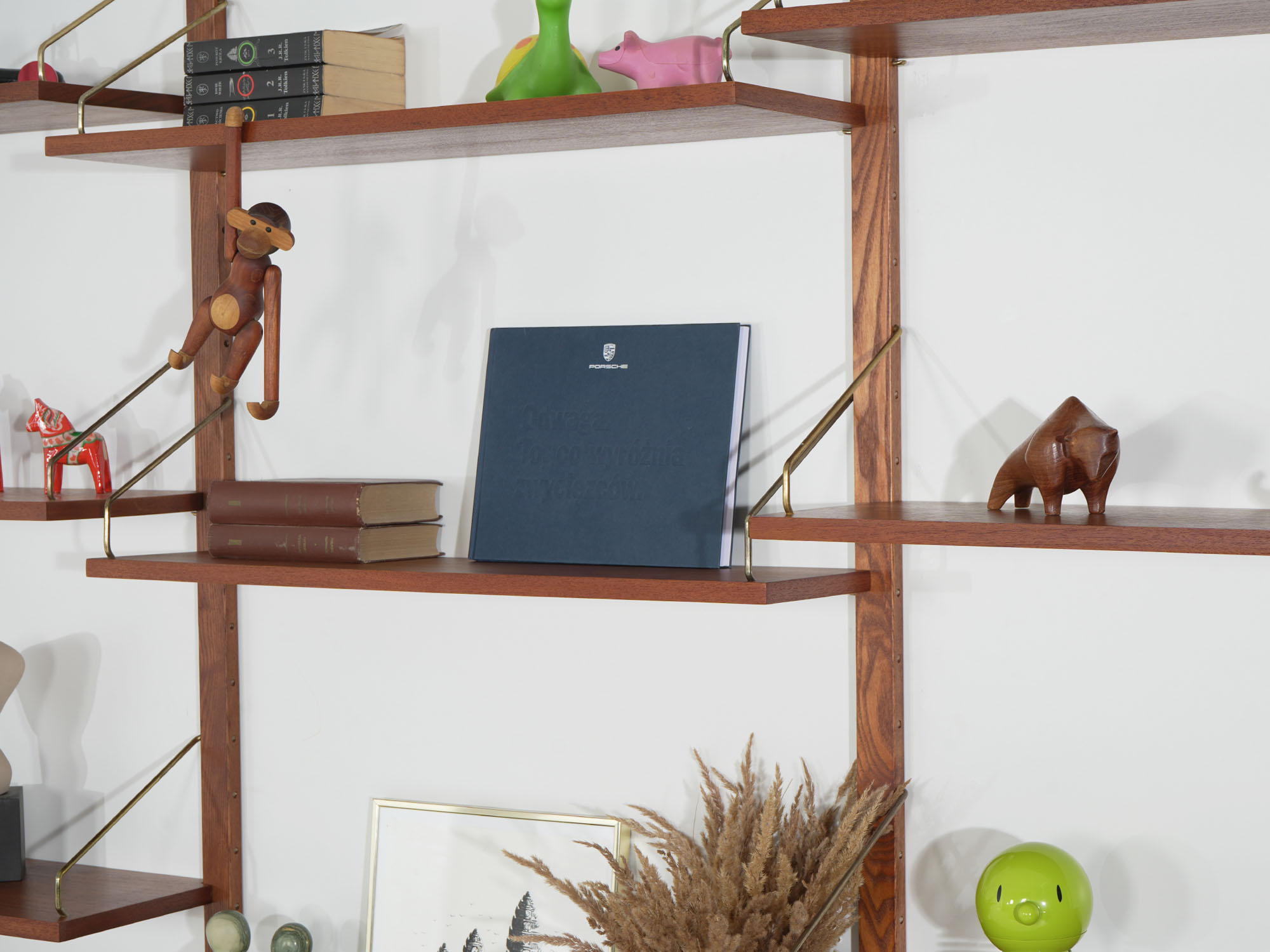
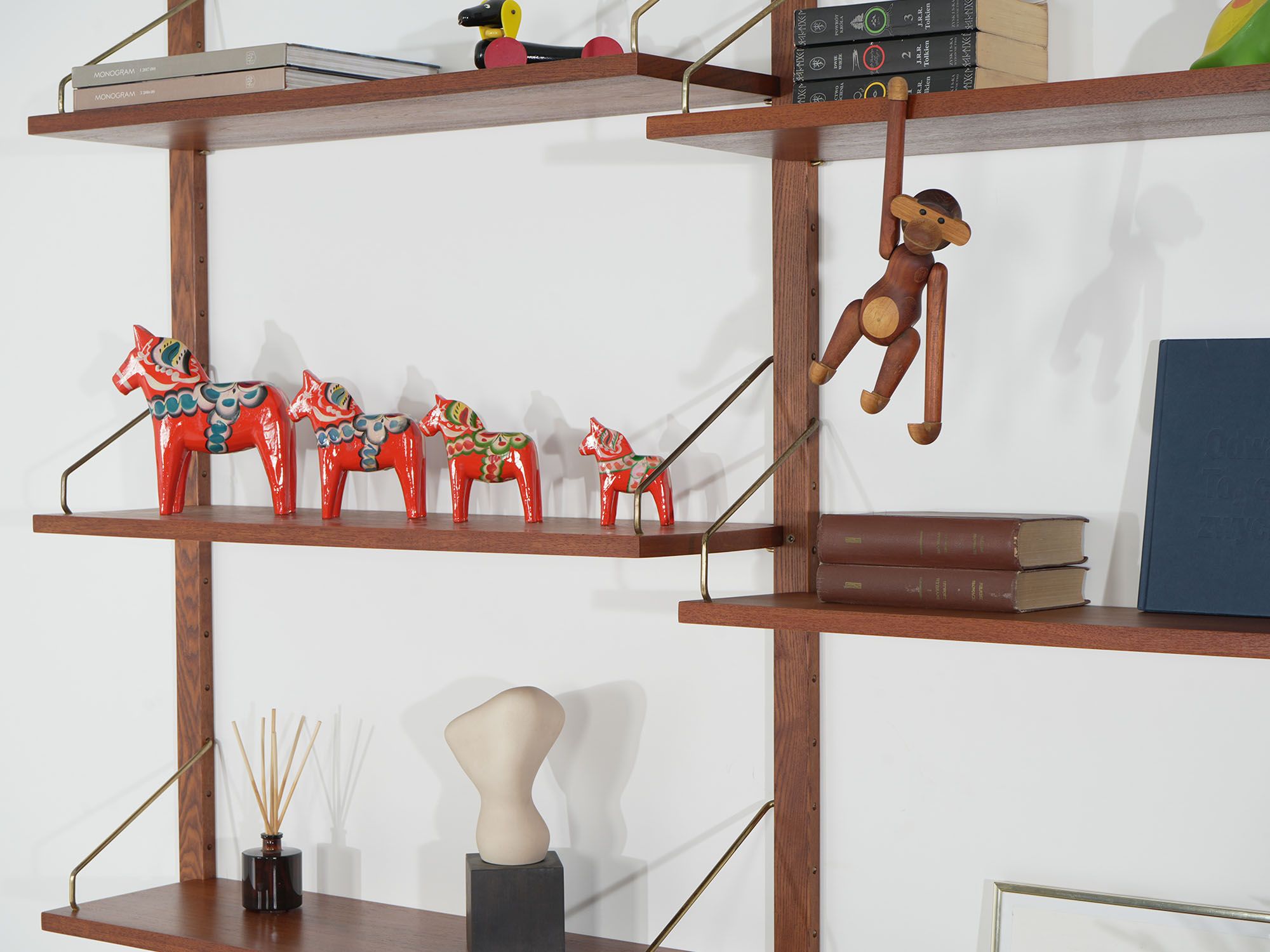
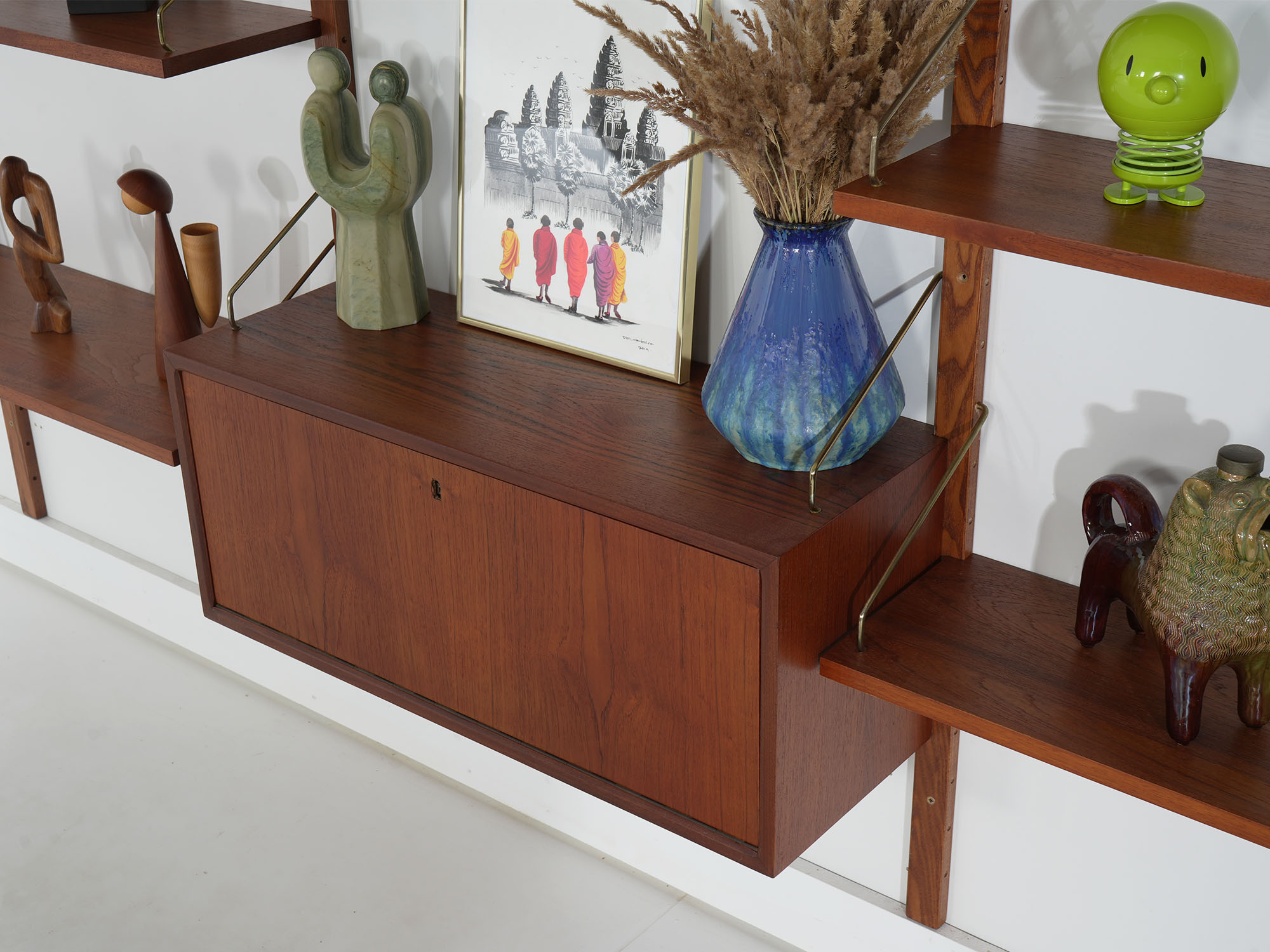
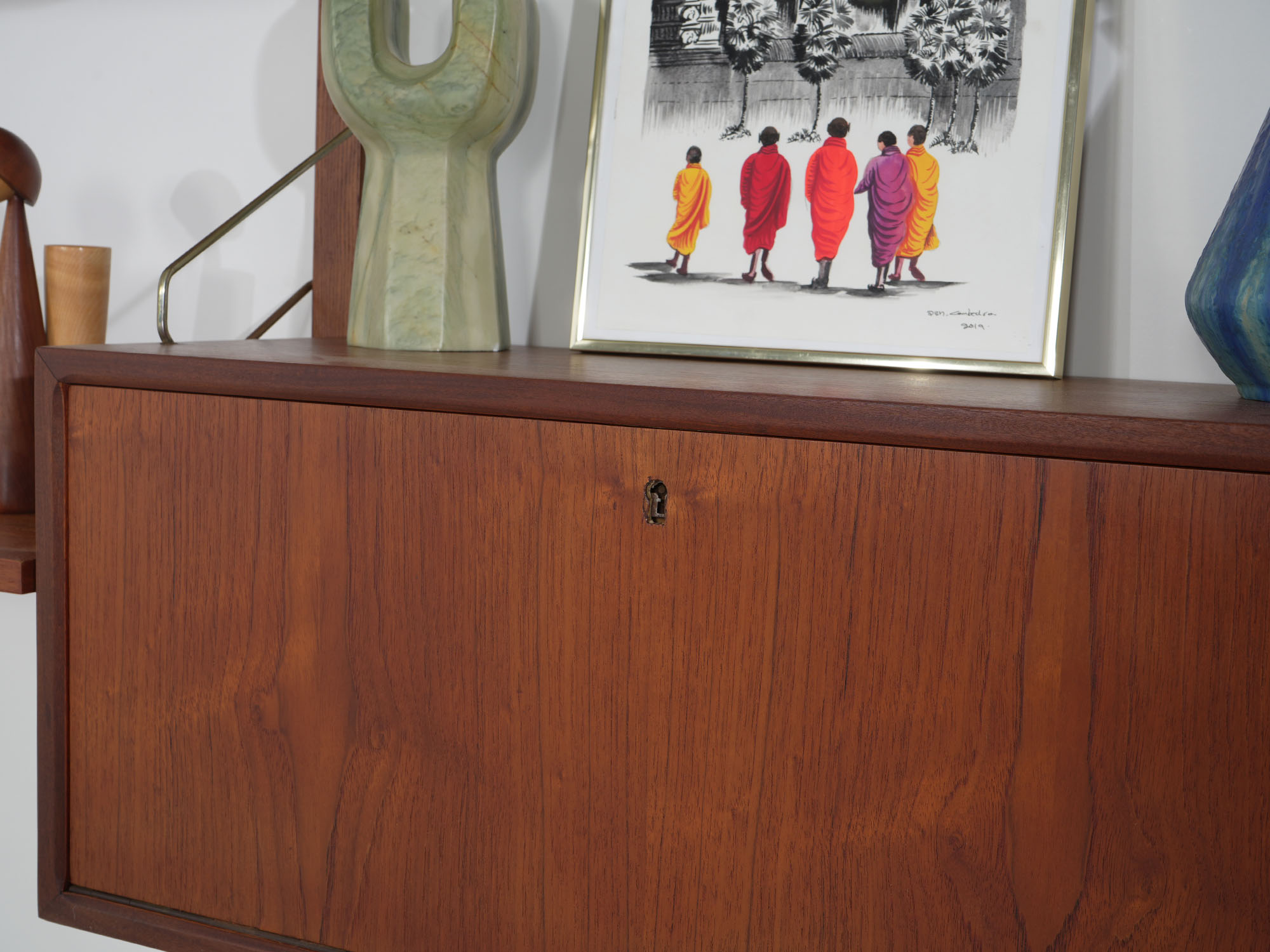
The construction relies on four solid wood uprights that form the framework for suspended elements. The current configuration combines ten open shelves of varying depths with one closed cabinet positioned in the central section. All modules slide along the uprights and can be adjusted to any height, while the arrangement itself should be seen as a starting point rather than a fixed solution. The modular design allows both reconfiguration and expansion with additional elements.
Poul Cadovius did more than design furniture — he created a new way of thinking about domestic space. His concept of lifting storage off the floor and suspending it from the wall emerged from observing the shrinking apartments of post-war Scandinavia. The CADO system, an evolution of his earlier Royal System, enabled users to reshape their storage arrangements as needs changed over time. This approach made Cadovius's solutions one of the defining exports of Danish design, manufactured under license beyond Denmark's borders as well.
The shelving system works equally well as a living room library, home office storage, or hallway organisation. Shelves with a depth of twenty-four centimetres accommodate books and albums, while the closed cabinet conceals documents and smaller items. The width exceeding two metres allows an entire wall to be organised while maintaining the visual lightness characteristic of Scandinavian design.
The piece is in good condition, with signs of use typical for furniture from the 1970s. The surfaces show minor scratches and scuffs, while filled losses indicate past conservation work. The more noticeable traces of use are also documented in the photographs, so that the actual state of preservation is conveyed as faithfully as possible.
Technical data
| height: | 200 cm |
| width: | 247 cm |
| depth: | 30 cm |